Order the right amount
Concrete Calculator
Free concrete calculator for slabs, footings, walls, and piers — cubic yards, bag counts, weight, and waste in one takeoff.
Your region
Feet, inches, cubic yards, and 40–80 lb bags
Concrete Calculator
Example measurements — replace them with yours.
Common sizes
Most orders add 5–10% for spillage, uneven ground, and the last bit left in the chute.
Cost, truck size, and concrete weight
Leave a price blank to skip that estimate. Use the number your supplier quoted.
This job
Add each pour — slab, piers, steps — and Concrete Calculator totals them.
From the field
Short notes from people who used the takeoff before they ordered.
“Used it for a 12×16 patio. Waste slider matched what the plant asked for — we finished with half a bag left, not a short load.”
“Finally a calculator that keeps inches on thickness and feet on length. Saved me from ordering 4× the yardage last spring.”
“Fence line takeoff was quick. Hole count, gravel depth, bag size — one screen. Called it into the supplier the same afternoon.”
Leave a review
Tell us how the takeoff worked on your job. Reviews stay on this device (saved in your browser).
Calculators
All calculators
Slabs and pads
Concrete Slab Calculator
Patios, shed pads, garage floors, and house slabs all start as a rectangle. Measure it once and read the order.

Bags
Concrete Bag Calculator
See every common bag at once. One cubic yard is 45 bags of 80 lb, 60 bags of 60 lb, or 90 bags of 40 lb.

Yards
Concrete Yard Calculator
Ready-mix is ordered in cubic yards. The big number is the exact volume with your extra. The plant line rounds up to the next 0.25 yard.

Footings
Concrete Footing Calculator
A footing is a buried beam. Width and depth are often in inches, and the run is in feet. The tool keeps those units apart.

Piers
Sonotube Concrete Calculator
A tube form is a solid cylinder. Pick 8, 10, 12, 16, 18, or 24 inches, then set the height and how many tubes you have.

Mix
Concrete Mix Ratio
A ratio is cement to sand to stone by volume. Enter the wet concrete you need to place. The batch is the loose materials that make it.

Gravel
Tons to Cubic Yards
Gravel is ordered in tons and placed in inches. The calculator connects those two units and adds extra for compaction.

Cost
Concrete Slab Cost Calculator
The volume is the part Concrete Calculator can know. The price is the part only your supplier knows. Type it in and the total appears.
How much concrete do I need?
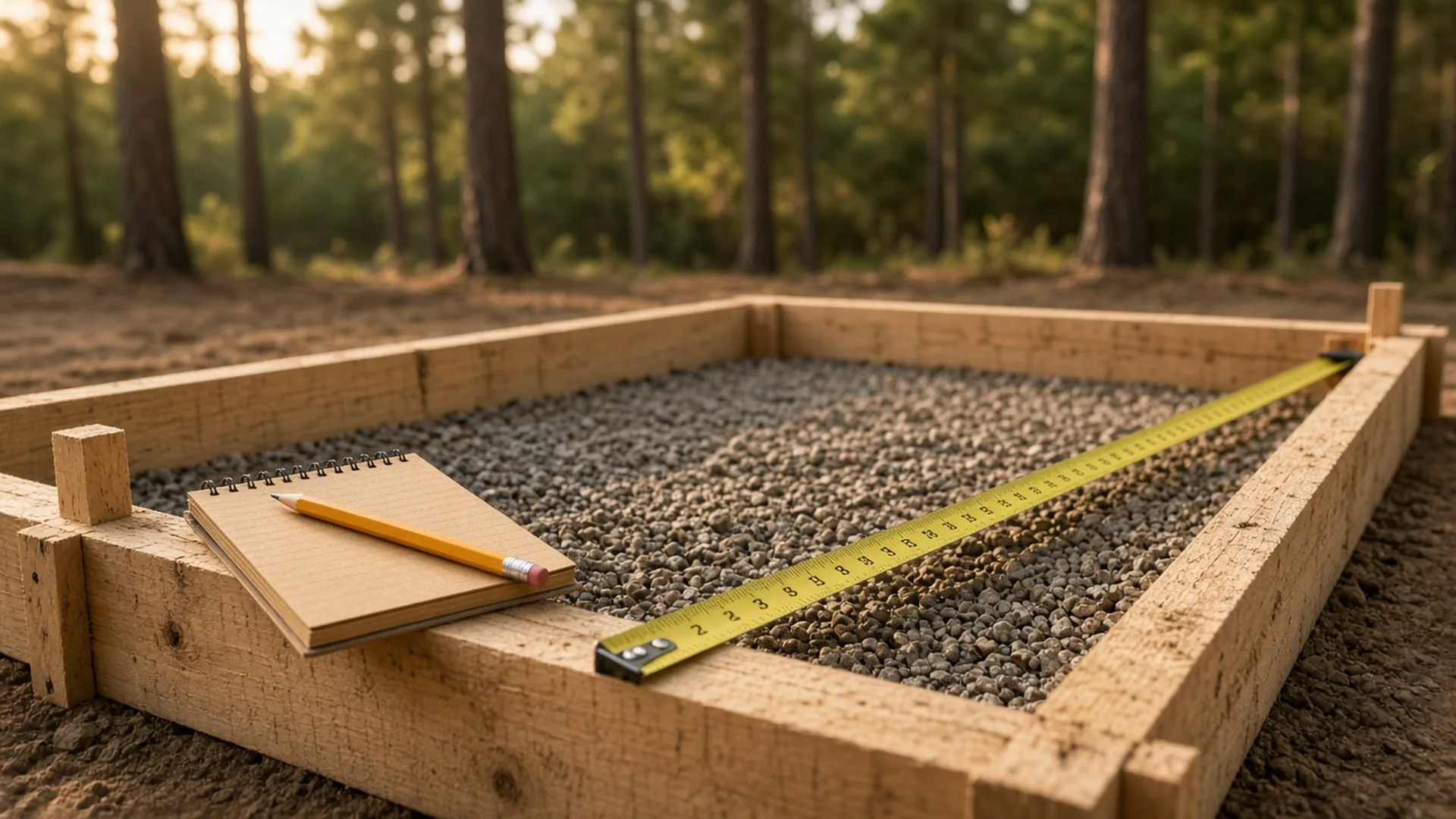
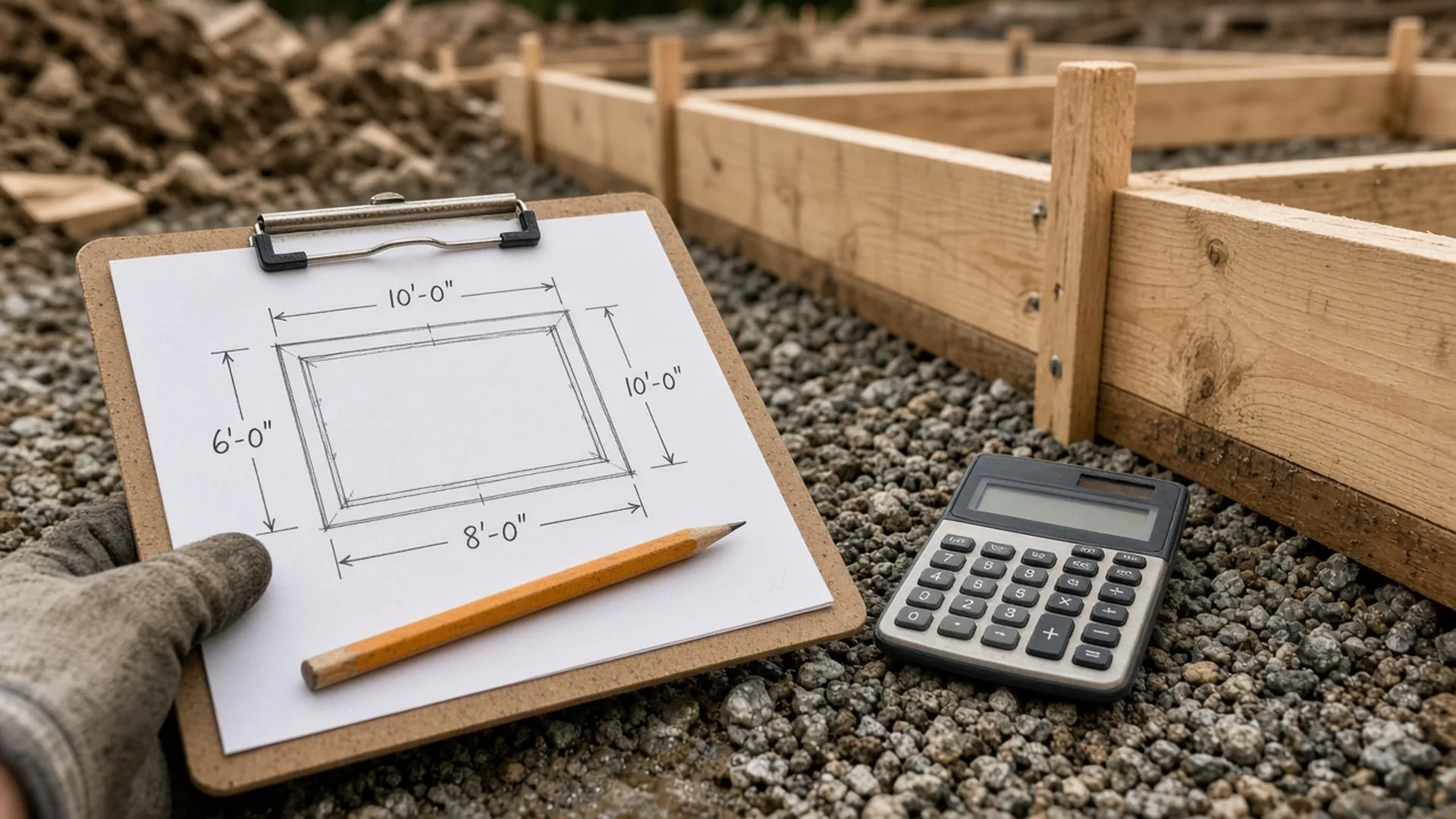
Measure the forms, convert everything to feet, multiply length × width × thickness, then divide by 27. That is cubic yards — the unit a ready-mix plant batches. A 10 by 10 foot pad at 4 inches is 33.3 cubic feet, or 1.23 cubic yards, before you add waste. People search “how much concrete do I need” because the inch-to-foot step trips them up more often than the multiplication.
Leave thickness in inches in Concrete Calculator. The field converts it. Then add 5–10% for spillage and a low spot in the gravel, and round a truck order up to the next quarter yard. Under about three-quarters of a yard, bags usually beat a short-load fee — open the bag calculator on the same volume before you decide.
If the pour is more than one rectangle — a garage slab plus piers, or a patio with a step — add each piece to the job list first. Rounding every pier to a quarter yard on its own over-orders. Sum the neat volume, apply waste once, then round once.
Cubic yards, bags, and weight in one pass
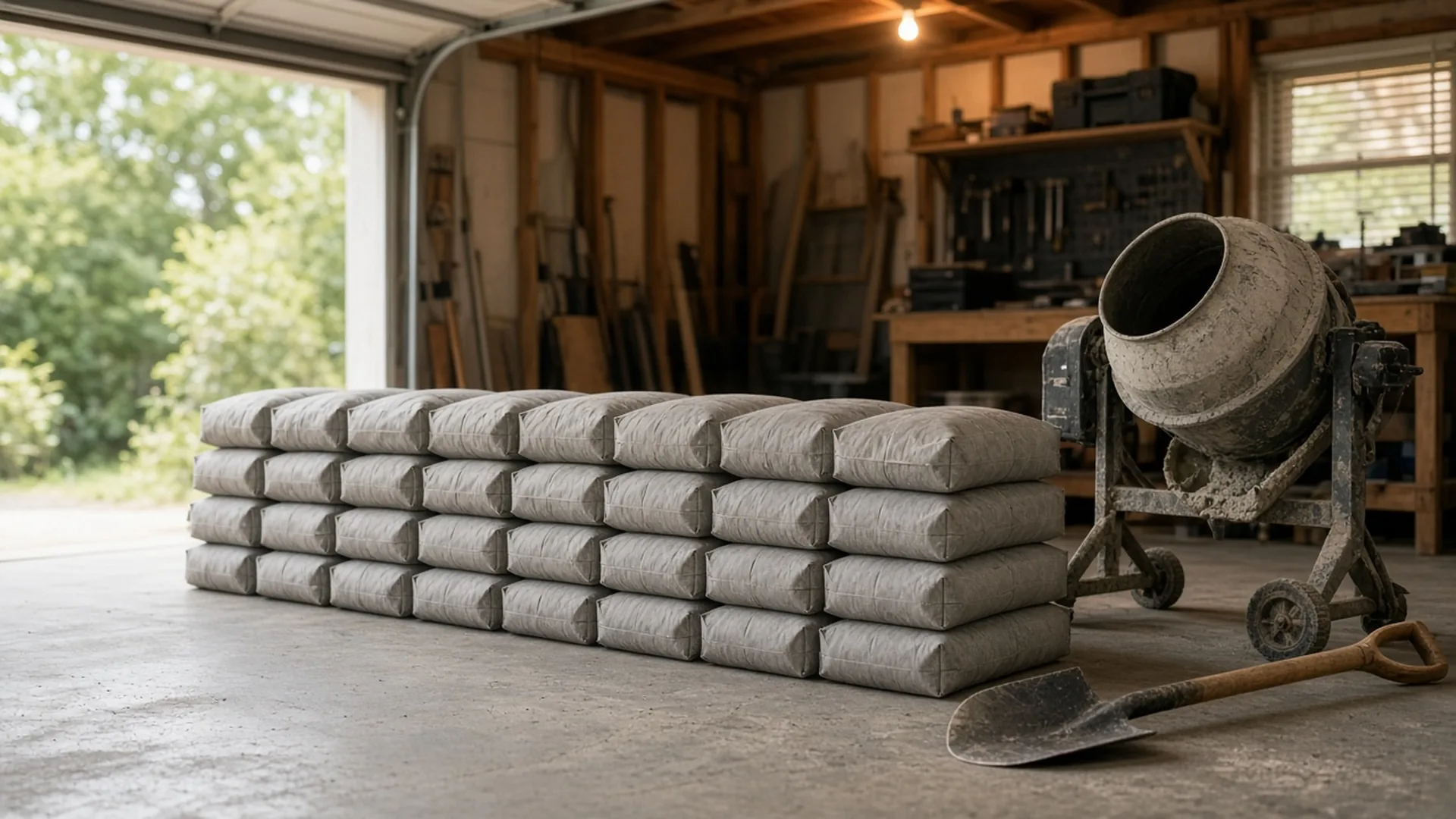
A concrete yard calculator answer and a concrete bag calculator answer are the same volume written two ways. One cubic yard is 27 cubic feet. At ordinary US bag yields that is 45 bags of 80 lb mix, 60 bags of 60 lb, or 90 bags of 40 lb. Concrete Calculator shows all three sizes and rounds up, because a partial bag is still a whole bag at the store.
The concrete weight calculator line uses 150 pounds per cubic foot for normal-weight mix — 4,050 pounds per yard. Switch density if you are planning lightweight concrete or want a small rebar allowance. Cost stays blank until you type your plant’s price; Concrete Calculator will not invent a national rate that is wrong for your zip code.
| Question | Concrete Calculator figure |
|---|---|
| 1 cubic yard | 27 ft³ |
| 80 lb bags per yard | 45 (0.60 ft³ yield) |
| 60 lb bags per yard | 60 (0.45 ft³ yield) |
| Weight per yard | ≈ 4,050 lb at 150 lb/ft³ |
| 4 in coverage per yard | 81 ft² |
| 6 in coverage per yard | 54 ft² |
Slabs, footings, piers, stairs, and curbs
The homepage tool is a full concrete slab calculator when you leave Slab selected. Change the shape for a concrete footing calculator, a wall, a square or round column, a sonotube calculator, a post hole run, solid stairs, curb and gutter, a circular pad, or a monolithic slab with a thicker edge.
That covers the pours Calculator.net splits into five forms and the shapes Concrete Calculator Max highlights — plus a job list so a garage slab and its piers total together before you call the plant. Patio, driveway, and sidewalk pages start from the same slab math with thickness presets that match how people search those jobs.
- Patio, driveway, and sidewalk pages start from the slab math with thickness presets.
- Mix ratio pages turn a 1:2:4 (or other nominal) ratio into cement bags, sand, and stone.
- Gravel and block tools sit beside the concrete calculators for base and CMU walls.
Cement calculator vs concrete calculator
Searchers type cement calculator and concrete calculator for the same job: how much material to place. Cement is the binder; concrete is the finished mix with sand and stone. this tool sizes the wet concrete you place. If you are site-mixing from a ratio, open the mix ratio calculator after you know the wet yards — a 1:2:4 batch is useless until you know how many wet cubic feet you need.
Ready-mix tickets talk in yards and psi. Bagged “concrete mix” is already proportioned. Portland cement bags alone are for people following a ratio. Use the tool that matches what you will buy, not the synonym you typed into Google.
What Concrete Calculator does that thin calculators skip
Every field keeps its own unit. Waste is a slider, not a hidden 10%. Bags round up. Ready-mix rounds to the next 0.25 yard. Short pours get a bag-sized note instead of a fake truck order. Prices only appear when you enter them. The formulas sit under the result so you can check the math by hand — the same bar we used on LinguaForge: tool first, worked numbers next, honest limits in the open.
Use the dedicated pages when Google sent you for a specific intent — bags, yards, weight, cost, mix ratio, sonotube, footing — so the answer matches the query. The homepage remains the head-term concrete calculator for people who are still choosing a shape. Field notes under Guides cover thickness, waste, and bag vs truck decisions without burying the calculator.
Quick checks before you call the plant
Confirm thickness on the drawing, not from a patio default. Soft soil, garage floors, and driveway loads change the section. Confirm whether the plant sells quarter yards. Ask about short-load fees under about three or four yards. If access is tight, price bags on the same volume so the fee does not surprise you on pour day.
- Read how much concrete do I need for the full measure → convert → waste path.
- Read ready-mix or bags when the bag count looks absurd.
- Read slab thickness before you lock a 4 inch assumption under cars.
Planning limits
These figures are for ordering and estimating. They are not a mix design, a psi rating, a rebar schedule, or a substitute for a drawing stamped for your soil and loads. When a building department sets thickness or cover, use that detail.
Compare bag totals with a delivered price when short-load fees appear. Sum multi-piece jobs before you round so piers and slabs share one ticket instead of three rounded tickets.
Frequently asked questions
How much concrete do I need for a 10×10 slab?
At 4 inches the neat volume is 1.23 cubic yards (33.3 ft³). With 10% waste, plan about 1.36 yards and ask the plant for 1.50 if they sell quarter yards. That is 56 bags of 80 lb mix before waste, or 62 with 10% added.
How many bags of concrete do I need for one yard?
Forty-five 80 lb bags, sixty 60 lb bags, or ninety 40 lb bags, using yields of 0.60, 0.45, and 0.30 cubic feet. Always round up.
How much does a yard of concrete weigh?
About 4,050 pounds (a little over 2 short tons) at 150 lb per cubic foot. A cubic metre of the same mix is about 2,400 kilograms.
Is this cement calculator free?
Yes. Concrete Calculator runs in your browser. Nothing you type is sent to a server. Job totals stay in this tab’s session storage until you clear them.
Can I calculate a mix ratio here?
Yes. Open the concrete mix ratio calculator for 1:2:4 and other nominal mixes after you know the wet volume from this tool.
Does Concrete Calculator replace an engineer?
No. It turns dimensions you already have into volume, bags, and weight. Footing sizes, slab thickness for soft soil, and strength grades belong on a drawing or a plant ticket.